4 hr
Médoc Wine Region Half-Day Tour from Bordeaux
Explore prestigious Left Bank vineyards with tastings at two classified estates in a small group
Reserve
Hand-picked by our editors — only the best 5 half-day wine experiences from 140 reviewed.
Verified partners for every tour, free cancellation where available, and instant confirmation on every booking.
4 hr
Explore prestigious Left Bank vineyards with tastings at two classified estates in a small group
Reserve
4 hr 30 min
Discover Grand Cru Classé châteaux, sip 3–4 Saint-Émilion wines, and savour a classic French aperitif platter.
Reserve
4 hr 30 min
Discover a UNESCO medieval village and taste organic wines at a family estate in the heart of Bordeaux's vineyard country
ReservePrices from verified partners. Availability updates in real time at checkout. Free cancellation policies apply where shown.
The landmarks, rooms, and views travelers on this tour remember — all visible on a single visit.
A globally recognized estate famous for its grand neoclassical architecture and exceptional Cabernet Sauvignon. The estate is a pillar of the 1855 classification.
Known for its distinctive three-towered silhouette and refined, aromatic wines. It is located near the Gironde estuary and remains a highlight for visitors.
An elegant estate that often hosts visitors for tastings. It is well-regarded for its historic park and commitment to sustainable viticulture.
Features a dramatic, fairy-tale castle design that is one of the most photographed landmarks on the Route des Châteaux.
Recognizable for its unique exotic, pagoda-inspired architecture that stands out significantly from traditional Bordeaux châteaux.
These regions provide distinct sensory experiences, where the Médoc offers classic elegance and Saint-Émilion provides a charming, historic atmosphere. Most visitors prefer the Médoc wine tour half day for its prestigious châteaux and structured cabernet-dominant blends.
| Feature | Top pick Médoc Region | Saint-Émilion |
|---|---|---|
Terroir profile |
Gravelly soil | |
Primary grape variety |
Cabernet Sauvignon | |
Architecture style |
Grand neoclassical châteaux | |
Landscape characteristics |
Flat vineyard plains | |
Distance from Bordeaux center |
30–50 km | |
| See tickets → |
Verdict: Select the Médoc wine tour half day tour if you favor powerful reds and grand estates, or choose Saint-Émilion if you prefer medieval village charm and merlot-based wines with your medoc wine tour half day tickets.
Choose your ticket, select your date, and reserve in under two minutes. Secure checkout handled by our verified partner.
Instant confirmation by email, with a mobile voucher you can save offline. No printing, no queuing at a collection desk.
Arrive at the entrance, show your voucher on your phone, and walk in. Most tickets include priority or skip-the-line access.
Practical details for your visit straight from our verified partners — hours, access, rules, and how to get there.
12 cours du 30 Juillet
Central departure for most tours
Regional trains run from Gare Saint-Jean to Margaux.
Follow the D2 Route des Châteaux north from Bordeaux.
Private transfers offer the most flexibility for a half-day excursion.
Smart casual attire is recommended for visits to grand estates. Comfortable footwear is essential for walking through vineyards and gravel estate grounds.
Keep belongings minimal, as storage space in tour vans is limited. Most châteaux do not have secure locker facilities for large luggage.
Photography is generally permitted in the vineyards and grounds of most estates. Please ask for permission before taking photos inside private cellar areas.
Vineyard terrain is often uneven and may be difficult for wheelchairs. Contact specific estates in advance for their accessibility features during a medoc wine tour half day.
Mobile phone use is permitted for photos. Please set devices to silent during guided cellar tours and tastings.
Some estates are welcoming to children, but many wine tasting tours have age restrictions. The Odyssée de la Rose Pauillac offers educational content for families.
Most tours include wine tastings but do not provide full meals. Guests should plan for lunch before or after their medoc wine tour half day experience.
Pets are generally not permitted inside winery production areas or tasting rooms. Service animals should be cleared with the tour operator in advance.
Booking a medoc wine tour half day in advance is highly recommended to secure spots. Most tours depart from central Bordeaux meeting points.
Best time to go, insider tips, nearby landmarks, and the cancellation fine print — flip through to skim what matters to you.
How crowds, weather, and events shift across the year.
Mild weather and budding vines make for beautiful scenery. Ideal for those who prefer avoiding summer heat.
The peak season for a medoc wine tour half day, offering warm temperatures and vibrant green vineyards. Morning visits are recommended to avoid heat.
Harvest season brings significant activity to the estates. The landscape turns shades of gold and amber.
Cooler and quieter. Many châteaux offer more intimate tours, though some may have reduced visiting hours.
Small details that turn a good visit into a great one.
Reserve your medoc wine tour half day well in advance, especially during the summer peak season. Limited group sizes fill up quickly.
Arrive for your medoc wine tour half day between 09:00–12:00 for the best light. Morning tours are often cooler and less crowded.
Choose your medoc wine tour half day based on your preferred appellation, such as Margaux or Pauillac. Each area offers a distinct tasting profile.
Many tour operators no longer provide plastic bottles to protect the environment. Bring your own reusable water bottle.
Take advantage of the expert guide on your medoc wine tour half day. They can provide deep insights into the 1855 classification.
A half-day tour typically skips lunch. Eat a hearty meal in Bordeaux before your medoc wine tour half day trip.
Confirm the exact meeting point for your medoc wine tour half day. Tours often depart from the Bordeaux Tourist Office or specific central squares.
Non-bookable sights within a short walk — free to visit, easy to pair.
Famous thoroughfare lined with historic estates.
World-renowned estate with neoclassical architecture.
The scenic body of water that defines the local terroir.
Expansive rural landscape surrounding the vineyards.
Flexible, no hidden fees.
Most operators allow free cancellation up to 24 hours in advance for a full refund. As Médoc is a wine region, not a single attraction site, the entrance fee is 0 EUR.
Hand-picked options within walking distance — pick a district for vibe, or a specific hotel for convenience.
Best for proximity to tour meeting points.
Stay in the heart of the wine region.
Quiet vineyard stays close to famous châteaux.
The Médoc was a marsh before it was a vineyard. Dutch engineers drained it in the seventeenth century, cutting drainage channels called jalles through waterlogged ground north of Bordeaux. What emerged was gravel: deep beds of quartz and pebble carried down by the Garonne during glacial retreat. That gravel drains fast, holds daytime heat, and forces vine roots deep. Cabernet Sauvignon, difficult to ripen elsewhere in France, found its terrain here. The 1855 Classification fixed the region's hierarchy in place. Commissioned for the Paris Exposition Universelle, brokers ranked châteaux by the prices their wines had commanded over decades. Sixty-one estates were listed across five growths. Only one change has been made since: Mouton Rothschild's promotion to First Growth in 1973. Four of the five First Growths — Lafite, Latour, Margaux, Mouton — sit on the Left Bank, within an hour's drive of the city. This is why a medoc wine tour half day works as an itinerary at all: the appellations stack along the D2, the so-called Route des Châteaux, in a narrow ribbon between the Gironde estuary and the pine forest of the Landes. The estuary matters more than the postcards suggest. Its water moderates frost and tempers heat, and growers still speak of vines that can see the river. Saint-Estèphe, Pauillac, Saint-Julien and Margaux run south along that bank, each appellation a few kilometres wide. Architecture followed money. Château Margaux's neoclassical portico dates from 1815, designed by Louis Combes; Cos d'Estournel's pagoda towers, finished in the 1830s, were an importer's homage to his Indian trade. Pichon Longueville's turreted façade is nineteenth-century theatre in stone. Across the river, the Right Bank offers a different logic — limestone plateau, Merlot dominance, and Saint-Émilion's medieval village, a UNESCO World Heritage site since 1999 with its monolithic church carved from the rock beneath the square. Several medoc wine tour half day tours pair the two banks in a traveller's mind rather than a single afternoon, which is why the shorter Bordeaux vineyard excursions on this page split between Left Bank châteaux and Saint-Émilion's cloisters. Both fit inside four hours. Neither pretends to be complete. The Médoc alone holds roughly 16,500 hectares under vine, and the barrel cellars, the chai, remain the working heart of every estate visited.
"The Médoc was a marsh before it was a vineyard, and the gravel left behind decided everything after."
A step-by-step walkthrough of the visit — what you'll see, how long each stage takes, and the details that matter.
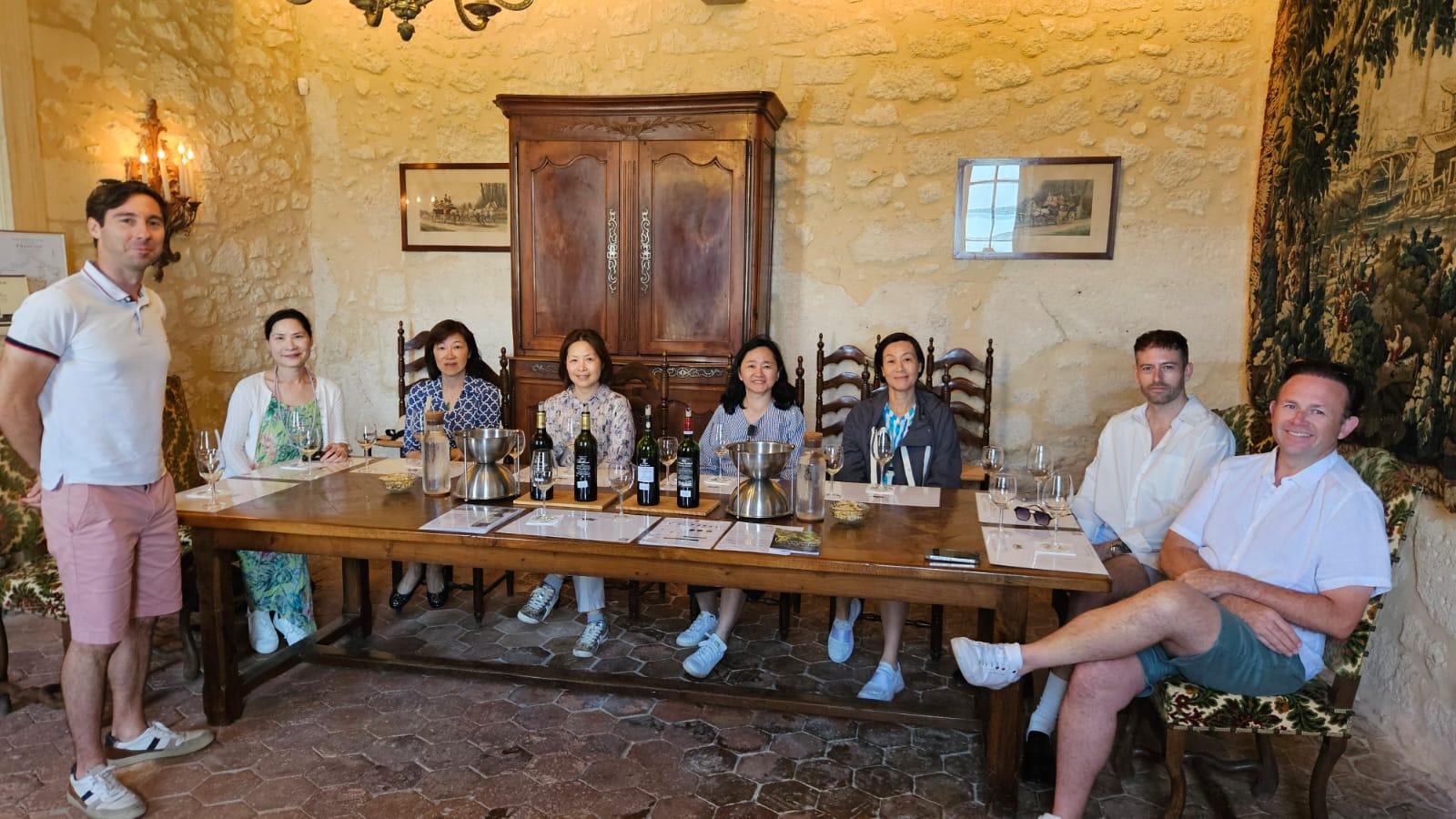
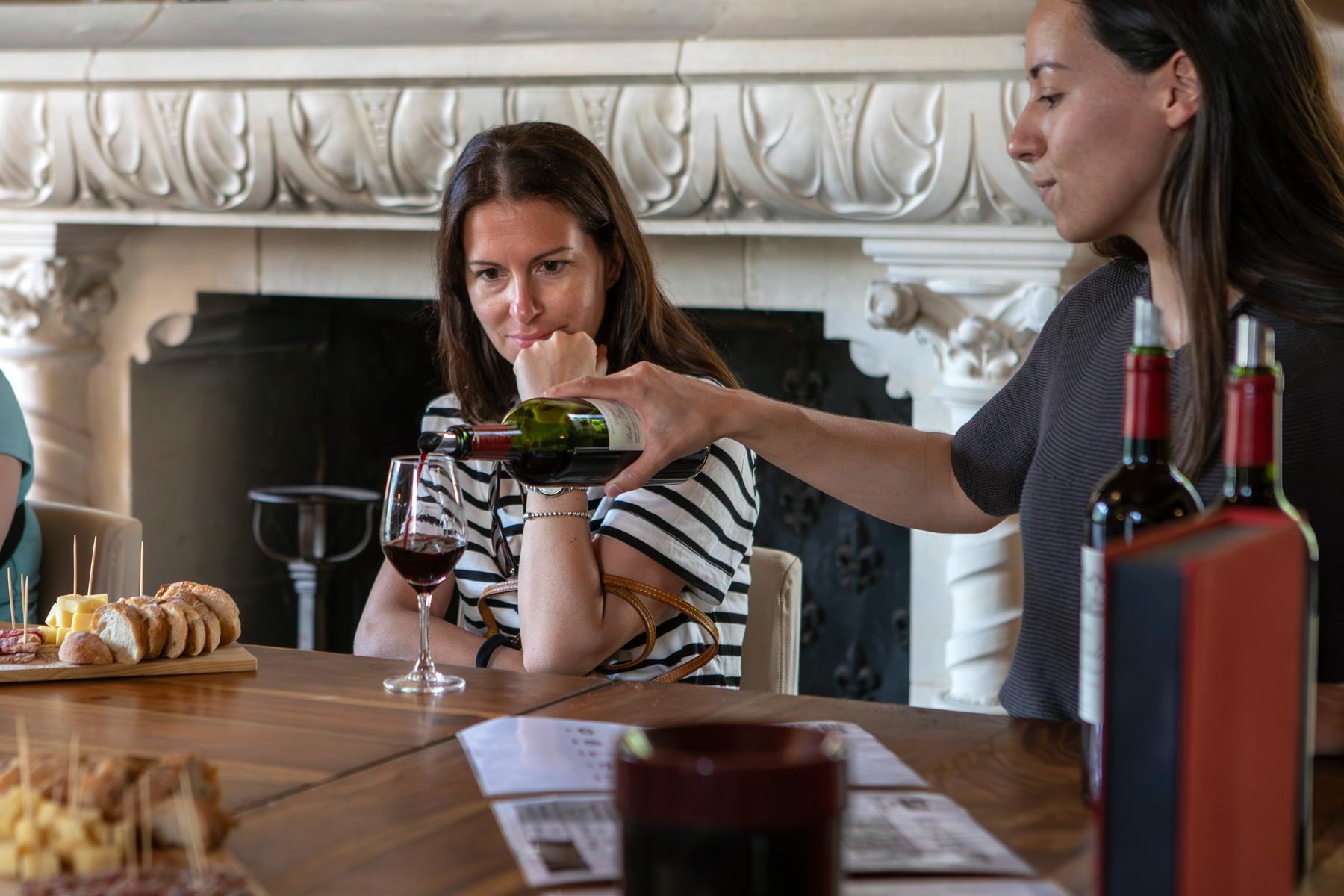
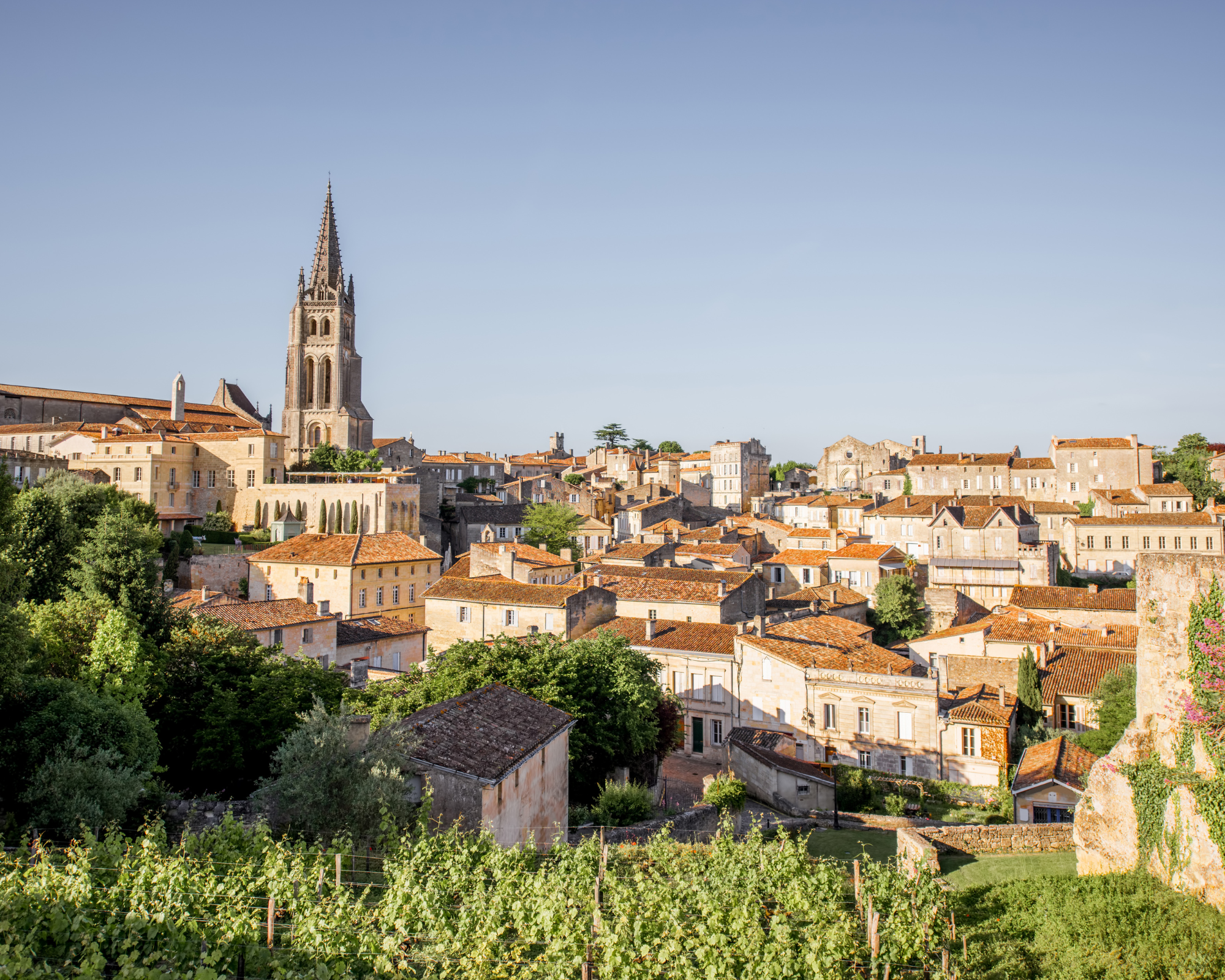
You meet your guide in central Bordeaux and the minibus clears the city inside twenty minutes. The D2 begins soon after. You watch the appellation signs pass — Margaux, then Saint-Julien — and rows of Cabernet Sauvignon run to the horizon on either side, pruned low over pale gravel. At the first château you step into the chai. It is ten degrees cooler than the courtyard. Your guide walks you past rows of oak barriques, explains why the estate replaces a third of them each vintage, and points out the chalk marks tracking each lot. You handle a vine cutting. You learn to read a label: commune, classification, vintage. Then the tasting. Three or four wines, poured in sequence, youngest first. You are shown how to tilt the glass against white paper to judge the rim, and nobody minds if you use the spittoon. A medoc wine tour half day usually includes a second estate, smaller, often family-run, where the winemaker pours personally. On the return you pass the estuary at its widest. If your booking is a Saint-Émilion half-day tour instead, you climb the village's cobbled hill, duck into the monolithic church, and taste Merlot-led blends in a cellar cut from limestone. Either way you are back in Bordeaux by mid-afternoon, with the evening still yours.
For the best experience, aim for a 09:00–12:00 arrival window to benefit from cooler temperatures and ideal vineyard light. This is the optimal time for a medoc wine tour half day.
There is a 0 EUR entrance fee, as the Médoc is a wine region, not a single attraction site. You will only pay for your specific tour booking.
You can book your medoc wine tour half day online through various tour operators or the Bordeaux Tourist Office website.
Smart casual dress and comfortable walking shoes are recommended for every medoc wine tour half day to ensure you are comfortable on uneven vineyard grounds.
Policies vary, but many tours focus on adults due to the nature of wine tasting. Always check the specific requirements for your medoc wine tour half day.
Yes, a typical medoc wine tour half day includes visits to two or three selected estates, providing a diverse tasting experience.
Most booked medoc wine tour half day products include round-trip minivan transportation from central Bordeaux.
You can typically cancel your medoc wine tour half day tickets up to 24 hours in advance for a full refund.
You can reach the region by taking a train from Gare Saint-Jean to Margaux or by joining a guided medoc wine tour half day departing from Bordeaux.
Photography is encouraged in the vineyards, though you should always ask permission before taking photos inside private cellars during your medoc wine tour half day.